Nylon Monofilament Suture Training Kit (12-Piece)
Official Store Deal
Expert Analysis Overview
The Nylon Monofilament Suture Training Kit is an essential, high-volume tool for biohackers and medical trainees focused on developing precision surgical closure techniques. This kit provides the fundamental materials necessary for repetitive practice, critical for achieving mastery in wound repair and tissue approximation. Its design emphasizes consistency in material properties and needle characteristics, mirroring the demands of clinical settings.
Each packet contains nylon monofilament suture material. This singular strand construction minimizes tissue drag, allowing for smoother passage through various simulated tissues. The material's inherent strength supports secure knot tying.
Monofilament sutures are prized for their low tissue reactivity and smooth surface. This reduces the risk of bacterial adherence, a crucial factor in real-world surgical outcomes. For practice, this translates to a consistent feel, allowing the user to focus on technique rather than material inconsistencies.
Compared to braided sutures, monofilament options offer superior resistance to infection due to their non-capillary nature. This makes them a benchmark for many surgical procedures, and therefore, an ideal choice for foundational training.
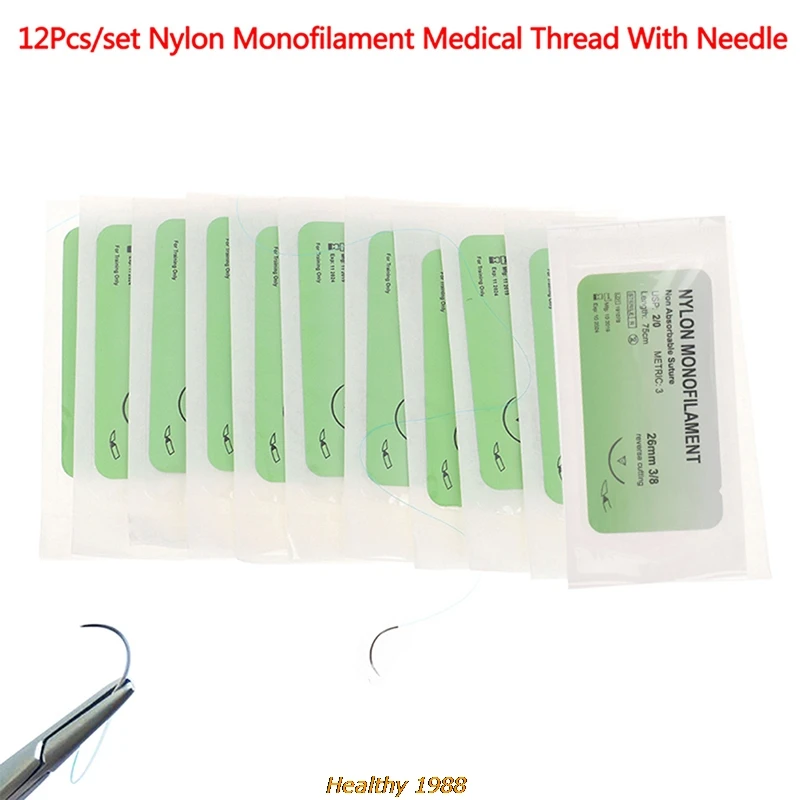
Visible packaging indicates various USP (United States Pharmacopeia) sizes, such as 2/0 and 3/0. These designations directly correlate to the suture's diameter and tensile strength. Metric equivalents, like METRIC 2 and METRIC 3, are also specified.
Understanding these sizing conventions is paramount for selecting the appropriate suture in clinical scenarios. Finer sutures (higher USP numbers like 5/0, 6/0) are used for delicate tissues, while larger sizes (lower USP numbers like 0, 1) provide greater strength for fascial closures. The kit's inclusion of common sizes allows for diverse practice scenarios.
This range ensures that trainees can adapt their technique to different tissue types and wound depths. Practicing with varied diameters helps develop a nuanced understanding of tissue resistance and optimal tension application.
The kit includes needles with a 3/8 circle curvature. This specific arc is widely used in various surgical fields, offering a balance between maneuverability and tissue penetration depth. The curvature dictates the path the needle takes through tissue.
Needle length, such as 19mm and 26mm, is also clearly marked. Shorter needles are often preferred for superficial closures or in confined spaces, while longer needles provide greater reach for deeper structures. The choice of needle length impacts the efficiency and safety of a suture pass.
Furthermore, the needles feature a reverse cutting edge. This design places the cutting edge on the outer curvature, reducing the risk of tearing through tissue compared to conventional cutting needles. Reverse cutting needles are particularly effective for skin closure, creating a clean, defined pathway.
The combination of needle curvature and cutting edge is critical for atraumatic tissue passage. A well-designed needle minimizes tissue trauma, which is a key principle in surgical technique. This kit provides the tools to practice these principles effectively.
Developing a feel for how different needle types interact with various simulated tissues is invaluable. It helps build the proprioception necessary for precise and controlled suturing. Consistent practice refines the motor skills required for optimal wound healing.
Unlike blunt-tipped needles or conventional cutting designs, the reverse cutting edge offers a predictable and clean incision. This ensures that practice sessions accurately simulate the challenges and requirements of real surgical intervention.
Each suture and needle combination is individually packaged in a sealed, sterile pouch. This ensures the integrity of the product until the point of use. While intended for practice, maintaining aseptic technique during setup is a valuable habit.
The clear packaging allows for easy identification of suture type, size, and needle characteristics. This organization streamlines the preparation process for practice sessions. Efficient material identification is a cornerstone of surgical safety.
This individual packaging prevents cross-contamination and maintains the sterility of each unit. For biohackers, understanding and respecting sterile fields, even in a practice environment, reinforces critical safety protocols.
This 12-piece set offers a cost-effective solution for extensive suture practice. The ability to perform numerous repetitions without significant financial outlay is a major advantage for students and practitioners. Repetition is the bedrock of skill development.
The accessible price point allows users to focus on developing muscle memory and refining knot-tying techniques. This is far more economical than utilizing expensive, limited-use cadaveric or high-fidelity simulation models for foundational skill building. The investment provides a high return in practical experience.
Compared to purchasing individual sutures, a bulk kit like this significantly reduces the per-unit cost. This economic efficiency directly supports the high-volume practice necessary for achieving proficiency and confidence in surgical closures.
For the biohacker focused on practical medical skills, this kit represents a direct pathway to quantifiable improvement. The consistent material and needle characteristics allow for focused training on hand-eye coordination, depth perception, and knot security. Tracking the speed and precision of suture placement over time provides actionable data on skill progression. This deliberate practice, integrating the kit into a structured training regimen, can significantly accelerate proficiency. Imagine approaching complex tissue repair challenges with the confidence born of hundreds of precise, practiced sutures, knowing your hands are trained to execute flawless closures every time. This kit is a foundational element in building that capability, allowing for iterative refinement of technique until it becomes second nature. It's about transforming theoretical knowledge into reliable, repeatable physical skill, enabling a higher degree of control over biological processes and outcomes. The commitment to consistent practice with these tools will directly translate into enhanced manual dexterity and a deeper understanding of tissue manipulation, ultimately empowering more sophisticated bio-interventions.
Precision in Practice: The Monofilament Advantage
Each packet contains nylon monofilament suture material. This singular strand construction minimizes tissue drag, allowing for smoother passage through various simulated tissues. The material's inherent strength supports secure knot tying.
Monofilament sutures are prized for their low tissue reactivity and smooth surface. This reduces the risk of bacterial adherence, a crucial factor in real-world surgical outcomes. For practice, this translates to a consistent feel, allowing the user to focus on technique rather than material inconsistencies.
Compared to braided sutures, monofilament options offer superior resistance to infection due to their non-capillary nature. This makes them a benchmark for many surgical procedures, and therefore, an ideal choice for foundational training.
Material Specifications and Biomechanical Relevance
Visible packaging indicates various USP (United States Pharmacopeia) sizes, such as 2/0 and 3/0. These designations directly correlate to the suture's diameter and tensile strength. Metric equivalents, like METRIC 2 and METRIC 3, are also specified.
Understanding these sizing conventions is paramount for selecting the appropriate suture in clinical scenarios. Finer sutures (higher USP numbers like 5/0, 6/0) are used for delicate tissues, while larger sizes (lower USP numbers like 0, 1) provide greater strength for fascial closures. The kit's inclusion of common sizes allows for diverse practice scenarios.
This range ensures that trainees can adapt their technique to different tissue types and wound depths. Practicing with varied diameters helps develop a nuanced understanding of tissue resistance and optimal tension application.
Needle Dynamics: Curvature and Cutting Edge
The kit includes needles with a 3/8 circle curvature. This specific arc is widely used in various surgical fields, offering a balance between maneuverability and tissue penetration depth. The curvature dictates the path the needle takes through tissue.
Needle length, such as 19mm and 26mm, is also clearly marked. Shorter needles are often preferred for superficial closures or in confined spaces, while longer needles provide greater reach for deeper structures. The choice of needle length impacts the efficiency and safety of a suture pass.
Furthermore, the needles feature a reverse cutting edge. This design places the cutting edge on the outer curvature, reducing the risk of tearing through tissue compared to conventional cutting needles. Reverse cutting needles are particularly effective for skin closure, creating a clean, defined pathway.
The Mechanics of Tissue Interaction
The combination of needle curvature and cutting edge is critical for atraumatic tissue passage. A well-designed needle minimizes tissue trauma, which is a key principle in surgical technique. This kit provides the tools to practice these principles effectively.
Developing a feel for how different needle types interact with various simulated tissues is invaluable. It helps build the proprioception necessary for precise and controlled suturing. Consistent practice refines the motor skills required for optimal wound healing.
Unlike blunt-tipped needles or conventional cutting designs, the reverse cutting edge offers a predictable and clean incision. This ensures that practice sessions accurately simulate the challenges and requirements of real surgical intervention.
Sterility and Packaging Integrity
Each suture and needle combination is individually packaged in a sealed, sterile pouch. This ensures the integrity of the product until the point of use. While intended for practice, maintaining aseptic technique during setup is a valuable habit.
The clear packaging allows for easy identification of suture type, size, and needle characteristics. This organization streamlines the preparation process for practice sessions. Efficient material identification is a cornerstone of surgical safety.
This individual packaging prevents cross-contamination and maintains the sterility of each unit. For biohackers, understanding and respecting sterile fields, even in a practice environment, reinforces critical safety protocols.
Value Proposition for Skill Acquisition
This 12-piece set offers a cost-effective solution for extensive suture practice. The ability to perform numerous repetitions without significant financial outlay is a major advantage for students and practitioners. Repetition is the bedrock of skill development.
The accessible price point allows users to focus on developing muscle memory and refining knot-tying techniques. This is far more economical than utilizing expensive, limited-use cadaveric or high-fidelity simulation models for foundational skill building. The investment provides a high return in practical experience.
Compared to purchasing individual sutures, a bulk kit like this significantly reduces the per-unit cost. This economic efficiency directly supports the high-volume practice necessary for achieving proficiency and confidence in surgical closures.
Optimizing Your Biohacking Toolkit
For the biohacker focused on practical medical skills, this kit represents a direct pathway to quantifiable improvement. The consistent material and needle characteristics allow for focused training on hand-eye coordination, depth perception, and knot security. Tracking the speed and precision of suture placement over time provides actionable data on skill progression. This deliberate practice, integrating the kit into a structured training regimen, can significantly accelerate proficiency. Imagine approaching complex tissue repair challenges with the confidence born of hundreds of precise, practiced sutures, knowing your hands are trained to execute flawless closures every time. This kit is a foundational element in building that capability, allowing for iterative refinement of technique until it becomes second nature. It's about transforming theoretical knowledge into reliable, repeatable physical skill, enabling a higher degree of control over biological processes and outcomes. The commitment to consistent practice with these tools will directly translate into enhanced manual dexterity and a deeper understanding of tissue manipulation, ultimately empowering more sophisticated bio-interventions.