ChoiceMMed Children's Finger Pulse Oximeter
Official Store Deal
Expert Analysis Overview
Precision Pediatric Biometrics: The ChoiceMMed Finger Pulse Oximeter
The ChoiceMMed Children's Finger Pulse Oximeter is a specialized biometric monitoring device engineered for precise, non-invasive pediatric oxygen saturation and pulse rate assessment. This instrument serves as an essential tool for parents and caregivers to quantify vital health metrics in children aged 1 to 12, offering immediate, actionable data for optimizing health oversight. Its design prioritizes ease of use and child-specific ergonomics, making it a distinctive offering in the realm of home health monitoring.
Ergonomic Design and Sensor Integration
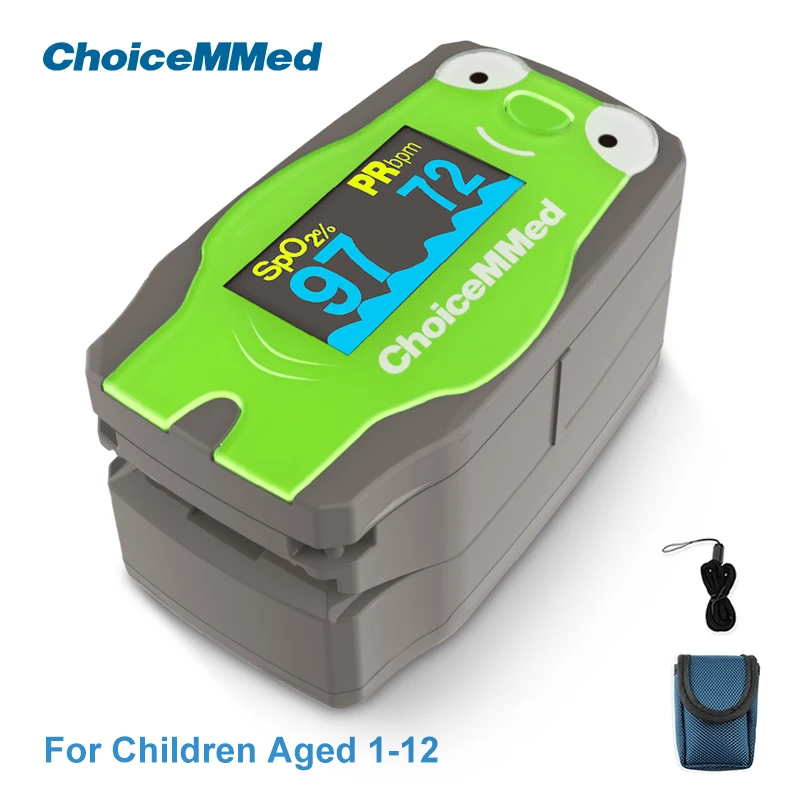
The oximeter presents a compact, grey and lime-green chassis, clearly indicating its target demographic with a playful, frog-like aesthetic. This visual appeal can help reduce anxiety in younger users during monitoring. The device's dimensions, approximately 49mm in length, 28mm in width, and 28mm in height, are specifically calibrated for smaller finger sizes, ensuring optimal sensor contact and data acquisition accuracy. At a mere 45g, including batteries, it is exceptionally lightweight.
Optimal sensor contact is paramount for accurate readings. The internal mechanism utilizes a spring-loaded clamp, gently securing the child's finger. This ensures the photoplethysmography (PPG) sensor, responsible for measuring light absorption through the tissue, remains correctly positioned. Such careful engineering minimizes motion artifacts, a common challenge in pediatric monitoring.
Compared to general-purpose adult oximeters, which often feature larger finger chambers, this pediatric-specific design is a significant upgrade. Adult devices can lead to inaccurate readings in children due due to poor fit, allowing ambient light interference or insufficient tissue contact. This dedicated design addresses that fundamental flaw.
Visual Data Presentation
Central to the oximeter's utility is its dual-color OLED display. This screen provides real-time readouts of SpO2 (blood oxygen saturation percentage) and PR (pulse rate in beats per minute). Beyond raw numbers, the display also incorporates a pulse bar graph and a plethysmography waveform. These graphical representations are critical for biohackers and attentive caregivers.
These visual aids offer immediate qualitative feedback on the signal quality and consistency of the readings. A strong, regular pulse bar graph and a smooth plethysmography wave indicate a reliable measurement. Erratic patterns suggest poor contact or movement, prompting repositioning for better accuracy. This visual feedback loop empowers users to discern data integrity.
Many entry-level oximeters only display numerical values. The inclusion of the pulse bar graph and plethysmography waveform on this ChoiceMMed unit elevates its diagnostic utility significantly, providing a more comprehensive physiological snapshot than simple numerical displays.
Operational Efficiency and Power Management
Operation is streamlined via a single-button interface, simplifying the monitoring process, particularly for parents who may be managing a restless child. The device offers quick measurements, typically within seconds, which is crucial for capturing data from an active child. Automatic power-off functionality conserves battery life, engaging after a period of inactivity. This is a practical feature.
Low power usage is a key design consideration, extending the operational life of the AAA batteries. The adjustable brightness (levels 1-10) further aids in power conservation while ensuring readability in various lighting environments. Four display directions allow for optimal viewing angles, enhancing user convenience regardless of how the device is held.
Unlike many consumer electronics that require frequent charging or battery replacement, the efficient power management of this oximeter ensures it is ready when needed. This reduces operational friction, a common point of frustration with less optimized devices.
Data Interpretation for Bio-Optimization
For the biohacker parent, the ability to quantify blood oxygen saturation and pulse rate provides invaluable data points for a child's health baseline. Consistent monitoring can help identify subtle deviations from normal ranges, which might indicate respiratory issues, cardiac stress, or other physiological imbalances. This proactive data collection supports early intervention.
Establishing a baseline for SpO2 and PR allows for personalized health optimization. For instance, tracking these metrics during periods of illness, physical activity, or even sleep can reveal patterns specific to the child's physiology. This empirical approach moves beyond subjective observation to data-driven insights. It provides objective information.
Standard pediatric care often relies on periodic check-ups. However, this device enables continuous, real-time data collection, offering a granular view of a child's health status that traditional methods cannot match. This empowers parents with a level of insight typically reserved for clinical settings.
Durability and Portability
The visible materials imply a durable plastic construction, designed to withstand the rigors of regular home use. The inclusion of a silicone case provides an additional layer of protection against minor impacts and scratches, extending the device's lifespan. A portable lanyard ensures the oximeter can be securely carried, preventing accidental drops.
This robust construction is vital for a device intended for children. Accidental drops and bumps are common in a household with young ones. The protective accessories signal a thoughtful approach to product longevity. It is a smart addition.
Many medical devices are designed for clinical environments and lack the practical accessories for everyday portability and protection. The ChoiceMMed unit, with its case and lanyard, is clearly engineered for active family life, offering enhanced durability compared to more fragile alternatives.
Value Proposition and Holistic Health Monitoring
The ChoiceMMed Children's Finger Pulse Oximeter offers significant value by democratizing access to critical physiological data. At its price point, it provides advanced monitoring capabilities previously associated with more expensive or clinical-grade equipment. This makes sophisticated health tracking accessible to a broader audience. It is an investment in proactive health.
Integrating this device into a child's health regimen allows for a more holistic approach to well-being. By regularly tracking SpO2 and PR, parents can gain a deeper understanding of their child's respiratory efficiency and cardiovascular health, fostering a data-informed environment for growth and development. This empowers parental decision-making.
Unlike relying solely on subjective observations or infrequent medical visits, this oximeter provides objective, quantifiable data that supports precise health management. It bridges the gap between occasional check-ups and continuous, informed care, offering a distinct advantage in managing a child's health trajectory.
Imagine the peace of mind derived from having immediate, accurate data on your child's oxygen levels and heart rate, especially during periods of concern or recovery. This compact device becomes an indispensable part of your home health toolkit, providing the empirical feedback necessary to make informed decisions and ensure optimal well-being for your child. It's about empowering parents with data, transforming worry into certainty, and proactively safeguarding a child's health with every precise reading.